Ultrasound Gene Switch: Non-Invasive Manipulation of Cellular Behavior with Remote Control

Jul 18, 2025 By

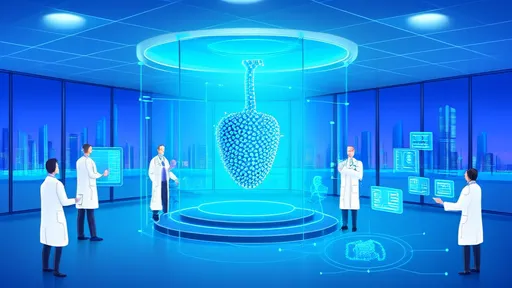
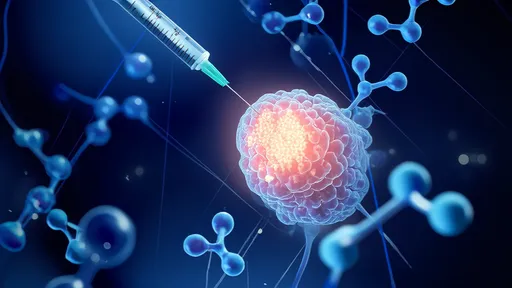
In a groundbreaking leap for biomedical engineering, scientists have developed a revolutionary technique that allows for the non-invasive control of cellular activity using ultrasound. This innovative approach, often referred to as "ultrasound genetic switches," enables researchers to remotely manipulate gene expression and cellular behavior with unprecedented precision. Unlike traditional methods that require physical intervention or chemical inducers, this technology harnesses the power of sound waves to activate or suppress specific genes deep within living tissues.

The implications of this discovery are vast, spanning from advanced therapeutic applications to fundamental biological research. By eliminating the need for invasive procedures, ultrasound genetic switches open new doors for treating neurological disorders, metabolic diseases, and even cancer. The ability to precisely target cells without affecting surrounding tissue represents a significant advancement in the field of precision medicine.

How Ultrasound Genetic Switches Work

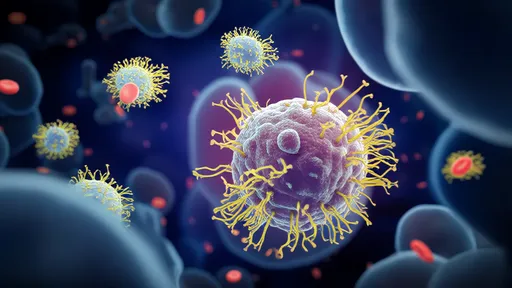
At the core of this technology lies a sophisticated integration of genetic engineering and ultrasound physics. Researchers have engineered specialized ion channels and receptors that respond to specific ultrasound frequencies. These genetically modified proteins act as biological switches, triggering cellular responses when activated by targeted sound waves. The system requires two key components: genetically modified cells that express these ultrasound-sensitive proteins, and an external ultrasound device to deliver the activating pulses.

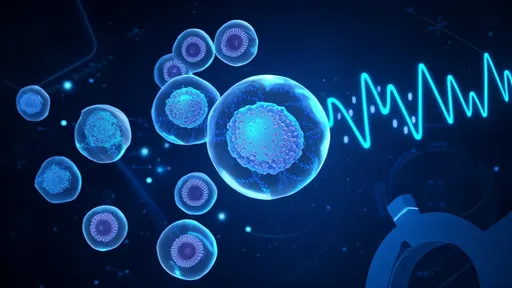
The process begins with the introduction of engineered genes into target cells, typically using viral vectors or other gene delivery methods. These genes encode for mechanosensitive proteins that have been modified to respond to the mechanical energy of ultrasound waves. When the ultrasound transducer emits pulses at the correct frequency and intensity, the mechanical vibrations cause these proteins to change conformation, initiating a cascade of intracellular events that ultimately alter gene expression.

Advantages Over Existing Technologies

Traditional methods of controlling cellular behavior often involve invasive procedures or systemic administration of drugs that can cause widespread side effects. Optogenetics, while precise, requires the implantation of light-emitting devices and only works in superficial tissues due to light scattering. Chemical inducers lack spatial precision and can persist in the body longer than desired. Ultrasound genetic switches overcome these limitations by providing non-invasive, spatially precise, and temporally controllable activation of cellular processes.

One of the most significant advantages is the ability to reach deep tissues without surgery. Ultrasound waves can penetrate several centimeters into the body with minimal attenuation, allowing researchers to target specific organs or regions without affecting surrounding areas. Moreover, the effects are immediately reversible - simply turning off the ultrasound stops the cellular activation, providing an unprecedented level of control over biological processes.

Potential Therapeutic Applications

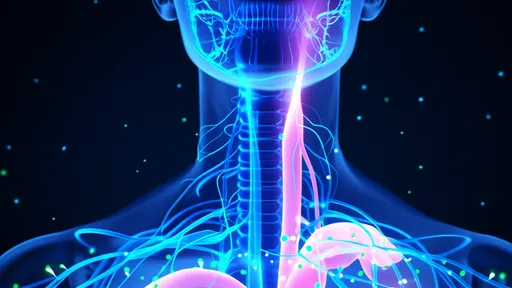
The medical applications of this technology are particularly exciting. In neurology, ultrasound genetic switches could revolutionize treatments for Parkinson's disease, epilepsy, and chronic pain by allowing doctors to precisely modulate neural activity without implanted electrodes. For metabolic disorders, researchers envision using this approach to regulate insulin production in diabetic patients or control appetite-regulating hormones in obesity cases.

Cancer therapy represents another promising application. Scientists are exploring ways to use ultrasound genetic switches to activate immune cells specifically within tumors or to trigger the production of therapeutic proteins only in cancerous tissues. This targeted approach could significantly reduce the side effects associated with conventional chemotherapy and radiation treatments.

Current Challenges and Future Directions

While the potential is enormous, several challenges remain before this technology can be widely implemented in clinical settings. One major hurdle is optimizing the delivery of genetic constructs to target cells in humans. Current methods rely on viral vectors, which present safety and efficiency concerns. Researchers are actively developing safer, more efficient gene delivery systems to overcome this limitation.

Another challenge involves refining the specificity of ultrasound targeting. While ultrasound can be focused to millimeter precision, ensuring that only the intended cells respond requires further development of the genetic switches themselves. Scientists are working to create more sensitive and specific ultrasound-responsive proteins that activate only within very narrow ranges of frequency and intensity.

Ethical Considerations and Safety

As with any emerging biotechnology, ultrasound genetic switches raise important ethical questions. The ability to remotely control cellular behavior, particularly in the brain, necessitates careful consideration of potential misuse. The scientific community is proactively addressing these concerns by establishing ethical guidelines and safety protocols for research and potential clinical applications.

From a safety perspective, ultrasound has an excellent track record in medical imaging, with decades of use demonstrating its low-risk profile. However, the long-term effects of combining ultrasound with genetic modifications require thorough investigation. Current research focuses on ensuring that the genetic modifications remain stable and that ultrasound activation doesn't cause unintended cellular stress or damage.

The Road Ahead

As research progresses, ultrasound genetic switches are poised to transform both basic biological research and clinical medicine. Several biotechnology companies have already begun developing commercial applications, and early-stage clinical trials may begin within the next few years. The convergence of genetics, bioengineering, and medical imaging in this technology represents a shining example of interdisciplinary innovation.

Looking forward, scientists anticipate that refinements in ultrasound hardware and genetic constructs will lead to even more precise control over cellular behavior. Some researchers speculate about future applications where multiple cell types could be independently controlled using different ultrasound frequencies, creating incredibly sophisticated biological circuits within living organisms.

While challenges remain, the development of ultrasound genetic switches marks a significant milestone in our ability to interface with biological systems. As this technology matures, it may well usher in a new era of non-invasive, precision medicine where doctors can adjust cellular functions as easily as adjusting the settings on a medical device - all without making a single incision.
Recommend Posts
Science

Inverse Engineering Materials: AI Designs High-Temperature Superconducting Crystal Structures

By /Jul 18, 2025

In a groundbreaking development that could revolutionize materials science, researchers have successfully employed artificial intelligence to design novel high-temperature superconducting crystal structures through inverse engineering. This unprecedented approach flips traditional materials discovery on its head by starting with desired superconducting properties and working backward to create viable atomic configurations.
Science

Federated Learning Framework: Privacy-Preserving Training for Tumor Models Across Hospitals

By /Jul 18, 2025

The healthcare industry stands at the precipice of a technological revolution, one that promises to unlock unprecedented insights into complex diseases like cancer while safeguarding patient privacy. Federated learning, a decentralized machine learning approach, is emerging as a game-changer in training AI models across multiple hospitals without sharing raw patient data. This paradigm shift is particularly crucial in oncology, where collaborative research often clashes with stringent data protection regulations.
Science

AI-Embedded Physics: Neural Networks Learning the Second Law of Thermodynamics

By /Jul 18, 2025

In a groundbreaking fusion of physics and artificial intelligence, researchers are leveraging neural networks to unravel the complexities of the Second Law of Thermodynamics. This fundamental principle, which dictates the irreversible increase of entropy in isolated systems, has long been a cornerstone of classical physics. Now, machine learning is offering new tools to explore its nuances, simulate its behavior, and even predict its implications in complex systems where traditional analytical methods fall short.
Science

Vagus Nerve Mapping: Targeting Chronic Inflammation with Electrical Stimulation Therapy

By /Jul 18, 2025

The vagus nerve, a meandering superhighway of neural communication between brain and body, has emerged as an unexpected ally in the fight against chronic inflammation. Once viewed primarily as a regulator of heart rate and digestion, this cranial nerve is now at the center of groundbreaking bioelectronic medicine research. Scientists are mapping its intricate branches with unprecedented precision, revealing how targeted electrical stimulation might reboot the immune system—offering hope for millions suffering from inflammatory conditions resistant to conventional therapies.
Science

Senolytic Vaccine: Activating the Immune System to Clear Zombie Cells

By /Jul 18, 2025

In a groundbreaking development that could redefine how we approach aging, scientists are making significant strides in the development of senescent cell vaccines – a novel immunotherapy designed to train the immune system to recognize and eliminate so-called "zombie cells." These dysfunctional cells, which accumulate with age, refuse to die while secreting harmful inflammatory compounds linked to nearly every age-related disease. The emerging field of senolytic vaccines represents a paradigm shift from treating individual age-related conditions to targeting a fundamental hallmark of aging itself.
Science

Ultrasound Gene Switch: Non-Invasive Manipulation of Cellular Behavior with Remote Control

By /Jul 18, 2025

In a groundbreaking leap for biomedical engineering, scientists have developed a revolutionary technique that allows for the non-invasive control of cellular activity using ultrasound. This innovative approach, often referred to as "ultrasound genetic switches," enables researchers to remotely manipulate gene expression and cellular behavior with unprecedented precision. Unlike traditional methods that require physical intervention or chemical inducers, this technology harnesses the power of sound waves to activate or suppress specific genes deep within living tissues.
Science

Intestinal Phage Therapy: Precise Bacterial Pathogen Elimination with Viral Missiles

By /Jul 18, 2025

In the ever-evolving landscape of medical science, a groundbreaking approach is emerging as a potential game-changer in the fight against antibiotic-resistant bacteria: bacteriophage therapy. Often dubbed "virus missiles" for their precision targeting capabilities, these microscopic predators are being harnessed to selectively eliminate harmful gut pathogens while preserving beneficial microbiota. This revolutionary treatment paradigm could rewrite the rules of infectious disease management.
Science

Mitochondrial Injection Therapy: Cellular Energy Reboot for Parkinson's Disease

By /Jul 18, 2025

The scientific community is abuzz with cautious optimism as researchers explore a groundbreaking approach to treating Parkinson's disease—mitochondrial injection therapy. This innovative strategy targets the very power plants of our cells, aiming to reverse the energy deficits that characterize this debilitating neurodegenerative disorder. Unlike traditional treatments that merely manage symptoms, this therapy attempts to address the root cause of cellular dysfunction in Parkinson's patients.
Science

Bionic Bone Scaffolds: 3D Printed Gradient Porosity Structures

By /Jul 18, 2025

The field of biomedical engineering has witnessed a groundbreaking advancement with the development of 3D-printed gradient porous scaffolds inspired by natural bone structures. These innovative implants, designed to mimic the complex architecture of human bones, are poised to revolutionize orthopedic and dental treatments. By leveraging the precision of additive manufacturing, researchers have created scaffolds with meticulously controlled porosity gradients that mirror the mechanical and biological properties of native bone tissue.
Science

Boron Nitride Transistors: 2D Semiconductors Breaking the Silicon Limit

By /Jul 18, 2025

The semiconductor industry has long been dominated by silicon, but researchers may have finally discovered a material capable of dethroning the reigning champion. Borophene, an atomically thin 2D form of boron, is emerging as a revolutionary semiconductor material that could overcome the fundamental physical limits of silicon-based electronics.
Science

Liquid Metal Robot: Reconfigurable Disaster Rescue Actuator

By /Jul 18, 2025

In a groundbreaking development for disaster response technology, researchers have unveiled a new generation of shape-shifting liquid metal robots capable of reconfiguring themselves to navigate complex environments. These remarkable machines represent a paradigm shift in search-and-rescue operations, offering unprecedented adaptability in the face of collapsed structures, flooded areas, and other hazardous scenarios where traditional rigid robots often fail.
Science

Self-Healing Ceramics: Automatic Crack Filling with Microencapsulated Repair Agents

By /Jul 18, 2025

In a groundbreaking advancement for materials science, researchers have developed a new class of self-healing ceramics capable of autonomously repairing cracks through embedded microcapsule technology. This innovation promises to revolutionize industries ranging from aerospace to biomedical engineering, where ceramic materials are prized for their durability but have historically suffered from brittleness and crack propagation.
Science

Aerogel Fabric: The Super Insulation Lining for Mars Spacesuits

By /Jul 18, 2025

The race to Mars has ignited a wave of innovation in aerospace technology, with scientists and engineers scrambling to develop materials capable of protecting astronauts from the planet’s harsh environment. Among the most promising breakthroughs is the integration of aerogel-infused fabrics into the design of next-generation spacesuits. These ultra-lightweight, highly insulating materials could revolutionize thermal regulation in Martian exploration gear, offering unprecedented protection against extreme temperatures while maintaining flexibility and durability.
Science

Geomagnetic Navigation in Animals: Quantum Compass of Magnetite in Pigeon Beaks

By /Jul 18, 2025

For centuries, the remarkable navigational abilities of homing pigeons have baffled scientists and enthusiasts alike. These feathery messengers can find their way home across hundreds of miles of unfamiliar terrain, a capability that persists even when visual landmarks are obscured. Recent breakthroughs in biophysics and quantum biology now suggest their secret lies in an extraordinary quantum compass hidden within their beaks.
Science

Urban Ecological Overpass: A Three-Dimensional Green for Network Wildlife Corridors

By /Jul 18, 2025

In the heart of our rapidly urbanizing world, a quiet revolution is taking place above the bustling streets. Cities across the globe are embracing an innovative approach to wildlife conservation through the creation of ecological skybridges – vertical green networks designed to reconnect fragmented habitats for urban-dwelling species. These living corridors represent more than just architectural marvels; they symbolize humanity's growing awareness of our shared ecosystem with nature.
Science

Insect Wing Acoustics: Unveiling the Fluid Mechanics Behind the Silent Flight of Mosquitoes

By /Jul 18, 2025

The hum of a mosquito is one of the most universally recognized—and universally loathed—sounds in nature. Yet, not all mosquitoes buzz equally. Some species have evolved near-silent flight, a trait that has long puzzled scientists. Recent breakthroughs in fluid dynamics and bioacoustics are finally revealing the secrets behind this stealthy adaptation.
Science

Marine Desert Greening: Carbon Sequestration through Artificial Upwelling of Algae

By /Jul 18, 2025

The vast oceanic deserts, covering nearly 40% of the Earth's surface, have long been considered biological wastelands. These nutrient-poor regions, known as subtropical gyres, are the marine equivalent of arid landscapes—sparse, lifeless, and seemingly incapable of supporting vibrant ecosystems. Yet, beneath their shimmering blue surfaces lies an untapped potential that could revolutionize our approach to carbon sequestration and climate change mitigation.
Science

Decoding Drought from Tree Cellulose Isotopes: The Climate Code in Tree Rings

By /Jul 18, 2025

In the quiet stillness of ancient forests, trees hold secrets etched into their very fibers—secrets that scientists are now learning to decipher. The study of tree ring cellulose isotopes has emerged as a groundbreaking method to reconstruct past climate conditions, particularly drought patterns. Unlike traditional dendrochronology, which relies on ring width, isotopic analysis delves deeper into the biochemical fingerprints left by environmental stress. This technique is rewriting our understanding of historical climate variability with unprecedented precision.