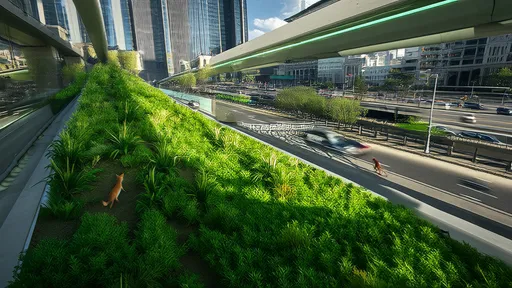
In the heart of our rapidly urbanizing world, a quiet revolution is taking place above the bustling streets. Cities across the globe are embracing an innovative approach to wildlife conservation through the creation of ecological skybridges – vertical green networks designed to reconnect fragmented habitats for urban-dwelling species. These living corridors represent more than just architectural marvels; they symbolize humanity's growing awareness of our shared ecosystem with nature.
The concept of wildlife crossings isn't new, but the vertical dimension adds a creative solution to space constraints in dense urban areas. Traditional ground-level crossings often prove impractical in city centers where every square meter is accounted for. By elevating these pathways, architects and ecologists have found a way to weave nature back into the concrete jungle without compromising valuable urban real estate.
Singapore's Forest Corridors stand as pioneering examples of this approach. The city-state has implemented an extensive network of aerial green bridges that connect the Bukit Timah Nature Reserve with the Central Catchment Nature Area. These lush, canopy-level pathways allow everything from flying lemurs to rare bird species to move safely between green spaces that were previously isolated by highways and urban development.
What makes these structures truly remarkable is their multi-layered design. Unlike simple overpasses, ecological skybridges incorporate diverse vegetation types that mimic natural forest strata. The upper levels feature tall trees that provide shade and fruit, while middle layers include shrubs and flowering plants that attract pollinators. Even the supporting structures often incorporate climbing vines and epiphytes to maximize habitat value.
The benefits extend far beyond wildlife conservation. These vertical green networks serve as natural air filters, capturing particulate matter and absorbing carbon dioxide. They help mitigate the urban heat island effect by providing shade and facilitating evapotranspiration. During heavy rains, the vegetation absorbs significant amounts of water, reducing strain on city drainage systems. Perhaps most importantly, they offer urban residents daily encounters with nature, fostering environmental awareness and mental well-being.
London's recently completed Queen Elizabeth Olympic Park Ecological Bridge demonstrates how these structures can become community landmarks. Spanning 63 meters across a busy roadway, the bridge doesn't just connect habitats – it connects people. With viewing platforms and educational displays integrated into the design, visitors can observe wildlife while learning about local ecology. The bridge has become both a functional wildlife corridor and an outdoor classroom.
Designing effective ecological skybridges requires careful consideration of local ecosystems. Architects collaborate closely with biologists to ensure the vegetation matches what would naturally occur in the area. The width of the bridge, types of planting, and even the soil composition must be tailored to target species. Some bridges incorporate special features like water drips to attract butterflies or rough bark surfaces that certain insects prefer for egg-laying.
One of the most ambitious projects currently underway is the Los Angeles Wildlife Overpass, set to become the largest urban wildlife crossing in the world when completed in 2025. Spanning ten lanes of the 101 Freeway, this 200-foot-wide bridge will reconnect the Santa Monica Mountains with the Simi Hills, allowing mountain lions and other species to roam freely after decades of genetic isolation. The design includes native chaparral vegetation and sound-dampening features to encourage wildlife use.
Critics initially questioned the cost and effectiveness of these structures, but research has demonstrated their value. Motion-activated cameras and tracking studies show consistent use by target species. In Banff National Park, where wildlife overpasses have existed for decades, research indicates they've prevented hundreds of vehicle collisions with large mammals while maintaining genetic diversity in isolated populations.
The psychological impact on urban residents shouldn't be underestimated. In Seoul, where an old highway overpass was transformed into the Seoul Skygarden, residents report lower stress levels and greater neighborhood satisfaction. The elevated linear park features 24,000 plants representing 228 species, creating an oasis above the city's chaos. Similar projects in New York, Paris, and Milan demonstrate how ecological skybridges can become beloved urban amenities.
As climate change accelerates, these green networks may play an increasingly vital role in helping species adapt. By allowing wildlife to move freely through urban areas, animals can shift their ranges in response to temperature changes or find new food sources when traditional ones fail. The bridges essentially create climate migration routes through otherwise impassable cityscapes.
Future designs promise even greater integration with urban infrastructure. Some architects envision skybridges that incorporate renewable energy generation through integrated solar panels or small wind turbines. Others propose combining them with vertical farms to produce local food while supporting biodiversity. The most advanced concepts include automated irrigation systems powered by rainwater collection and sensors that monitor wildlife usage patterns.
The movement toward ecological skybridges reflects a profound shift in how we view cities. No longer just human habitats, urban areas are being reimagined as shared spaces where civilization and nature can coexist. These aerial green pathways represent more than engineering solutions – they embody a new philosophy of urban design that values all life forms. As more cities adopt this approach, we may see the emergence of truly three-dimensional ecosystems where wildlife moves as freely through the vertical cityscape as humans do along its streets.
From Singapore's lush canopy bridges to Los Angeles' ambitious mountain lion crossing, these projects demonstrate that even in our most built environments, there's room for nature. They prove that with creativity and commitment, we can repair some of the fragmentation caused by urban growth. The ecological skybridge movement offers hope that future cities won't just be livable for humans, but for all species that call them home – whether on the ground, in the trees, or moving safely between them high above the traffic below.

By /Jul 18, 2025

By /Jul 18, 2025

By /Jul 18, 2025

By /Jul 18, 2025

By /Jul 18, 2025

By /Jul 18, 2025

By /Jul 18, 2025

By /Jul 18, 2025

By /Jul 18, 2025

By /Jul 18, 2025

By /Jul 18, 2025

By /Jul 18, 2025

By /Jul 18, 2025
By /Jul 18, 2025
By /Jul 18, 2025
By /Jul 18, 2025

By /Jul 18, 2025

By /Jul 18, 2025
